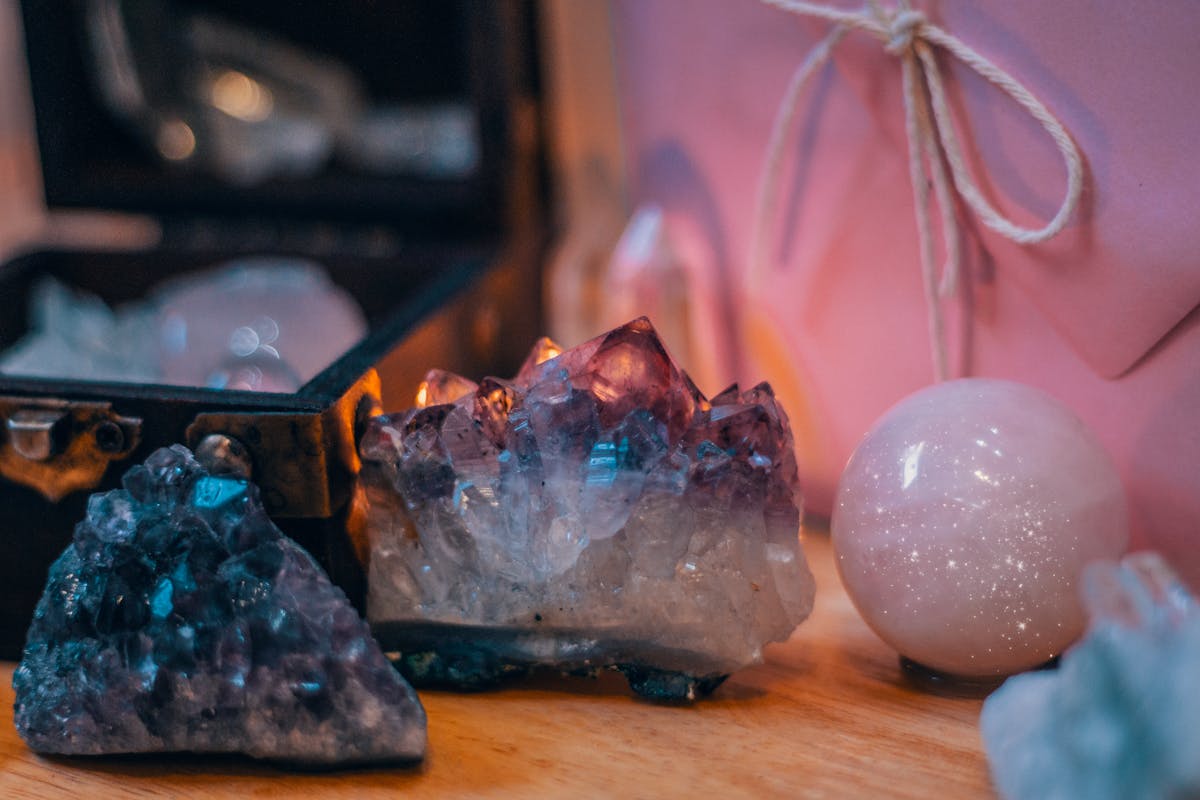
Crystal healing is an alternative medicine technique that employs stones and crystals as instruments for healing and personal growth. Practitioners of this method believe that crystals carry unique vibrations and energies that can positively influence the human body’s energy field, promoting physical, emotional, and spiritual well-being.
This practice is rooted in the concept that everything in the universe, including humans and crystals, vibrates at specific frequencies. By introducing crystals with particular vibrational properties into one’s energy field, it is believed that imbalances can be corrected and healing can occur.
History and Cultural Significance
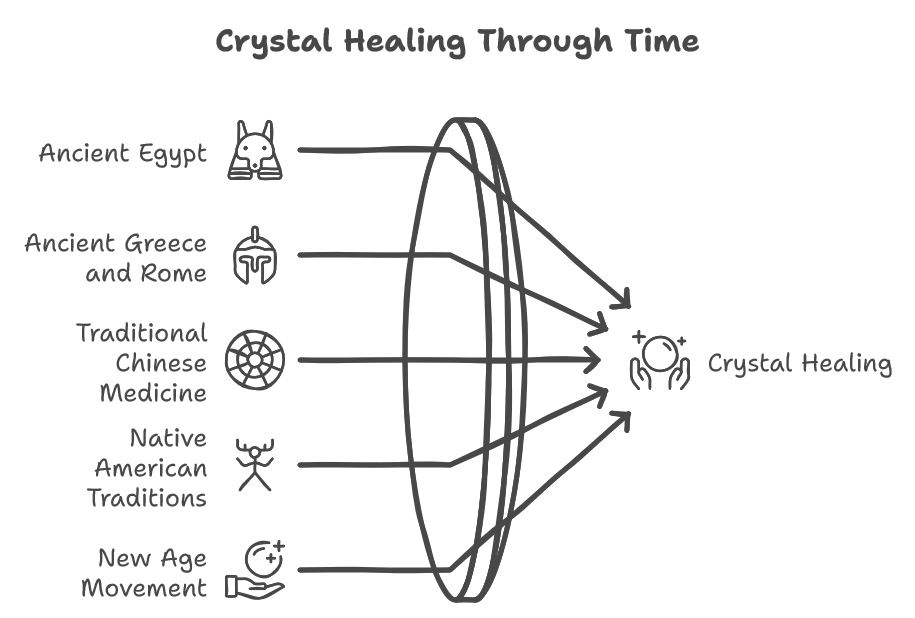
The use of crystals for healing and spiritual purposes dates back thousands of years, spanning various cultures and civilizations:
- Ancient Egypt: Egyptians used crystals in jewellery, cosmetics, and for protective amulets. Lapis lazuli and turquoise were particularly revered.
- Ancient Greece and Rome: Crystals were used in talismans and for divination purposes. Hematite was popular among soldiers for its alleged protective properties.
- Traditional Chinese Medicine: Crystals have been integrated into healing practices for over 5,000 years. Jade, in particular, is highly esteemed for its healing and protective qualities.
- Native American Traditions: Many indigenous cultures in the Americas have long traditions of using crystals in healing rituals and ceremonies.
- New Age Movement: The 1970s and 1980s saw a resurgence of interest in crystal healing in Western countries, coinciding with the growth of the New Age movement.
Today, crystal healing continues to be practised alongside other complementary and alternative medicine techniques, although it remains outside the realm of mainstream medical treatment.
Related Therapies and Practices
Crystal healing is often associated with a broader spectrum of alternative and complementary therapies. These practices share similar philosophies about energy, holistic healing, and the mind-body-spirit connection. Understanding these related therapies can provide a more comprehensive view of the landscape in which crystal healing exists:
- Reiki: A Japanese technique for stress reduction and relaxation that also promotes healing. Practitioners believe they can channel energy into the patient by means of touch to activate the natural healing processes of the patient’s body and restore physical and emotional well-being.
- Acupuncture: An ancient Chinese healing practice that involves inserting thin needles into specific points on the body to balance the flow of energy or life force known as “qi” or “chi.”
- Chakra Balancing: A practice rooted in Hindu and Buddhist traditions that focuses on aligning and balancing the body’s seven main energy centres, or chakras. Crystal healing is often incorporated into chakra work.
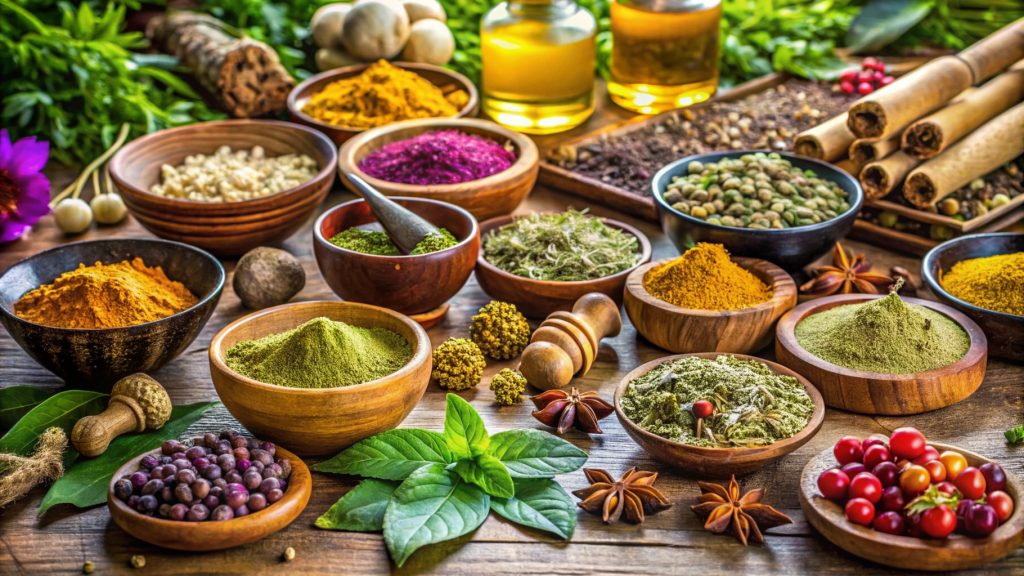
- Aromatherapy: The use of essential oils and other aromatic compounds for improving psychological or physical well-being. Like crystal healing, specific scents are believed to have different healing properties.
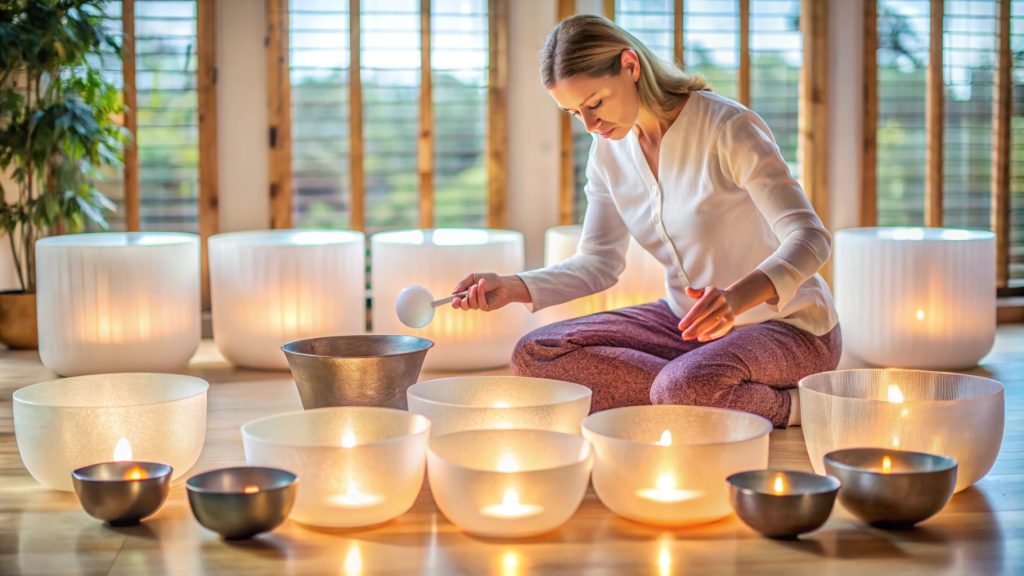
- Sound Therapy: This involves the use of various sounds and music to promote healing. Crystal singing bowls are sometimes used in this practice, creating a bridge between sound therapy and crystal healing.
- Colour Therapy (Chromotherapy): The use of colours to adjust body vibrations to frequencies that are believed to result in health and harmony. This practice often intersects with crystal healing, as different coloured crystals are associated with different healing properties.
- Flower Essence Therapy: Developed by Edward Bach, this therapy uses the essence of flowers to promote emotional and physical healing. Like crystal healing, it is based on the idea that these essences carry specific vibrational energies.
- Magnetic Therapy: The use of static magnetic fields to alleviate pain and promote healing. While the approach differs, the underlying belief in energy fields influencing health is similar to crystal healing.
- Reflexology: A technique that involves applying pressure to specific points on the feet, hands, or ears, which are believed to correspond to different body organs and systems.
These therapies, along with crystal healing, are often categorised under the umbrella of “energy healing” or “vibrational medicine.” Practitioners and proponents of these methods often use them in combination, believing that they can complement each other to provide more comprehensive healing.
It’s important to note that while many people find these practices beneficial for relaxation and stress relief, the scientific community generally considers them to be pseudoscientific. The effectiveness of these therapies, including crystal healing, has not been conclusively proven by rigorous scientific studies. However, some researchers argue that the placebo effect and the relaxation induced by these practices may contribute to perceived benefits.
As with crystal healing, individuals interested in exploring these related therapies should do so as a complement to, not a replacement for, conventional medical treatment. It’s always advisable to consult with a qualified healthcare professional before starting any new health regimen.
The Science and Controversy
The practice of crystal healing is controversial within the scientific community. While proponents claim various benefits, sceptics argue that there is no scientific evidence supporting the efficacy of crystal healing beyond the placebo effect.
Despite the lack of scientific support, many people report feeling benefits from crystal healing practices.
These effects might be explained by:
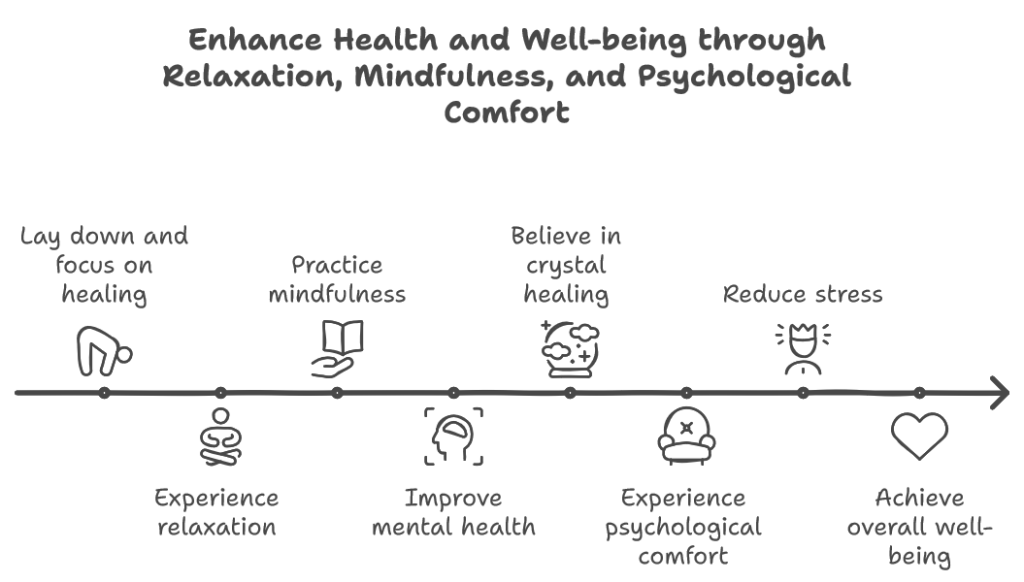
- Relaxation response: The act of lying down and focusing on healing may induce a state of relaxation, which has known health benefits.
- Mindfulness: The practice may encourage mindfulness, which has been shown to have positive effects on mental health.
- Psychological comfort: Believing in the healing power of crystals may provide psychological comfort and reduce stress.
It’s important to note that while crystal healing may be used as a complementary practice, it should not replace conventional medical treatment for health conditions.
Common Crystals and Their Purported Properties
Different crystals are believed to have various healing properties. Here are some commonly used crystals and their alleged benefits:
- Amethyst: Said to promote calmness and clarity of mind.
- Rose Quartz: Associated with love, compassion, and emotional healing.
- Clear Quartz: Considered a “master healer” and energy amplifier.
- Citrine: Believed to promote abundance, success, and positivity.
- Black Tourmaline: Thought to offer protection against negative energies.
- Selenite: Associated with mental clarity and cleansing of other crystals.
- Lapis Lazuli: Linked to wisdom, truth, and spiritual enlightenment.
- Jade: Believed to bring harmony and balance.
Methods of Using Crystals for Healing
Crystal healing can be practised in various ways:
- Wearing crystal jewellery: Keeping crystals close to the body throughout the day.
- Meditation with crystals: Holding or placing crystals nearby during meditation.
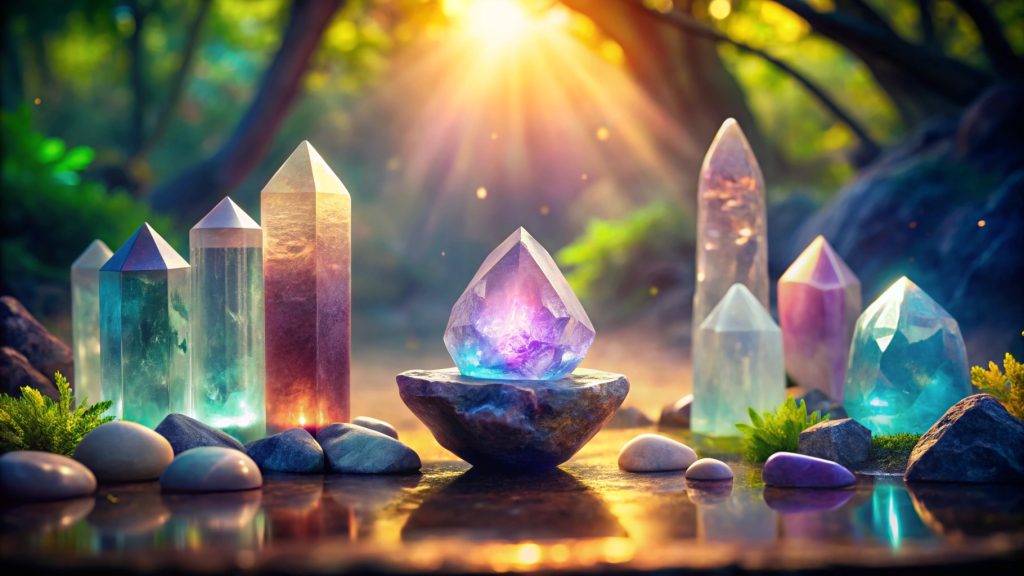
- Crystal grids: Arranging multiple crystals in geometric patterns for specific purposes.
- Placing crystals on the body: Laying crystals on specific body parts during healing sessions.
- Crystal elixirs: Water infused with the energy of crystals (without direct contact for safety).
- Carrying pocket stones: Keeping small crystals in pockets or bags for continuous exposure.
- Room decoration: Placing crystals in living spaces to influence the environment’s energy.
Crystal Chakra Alignment
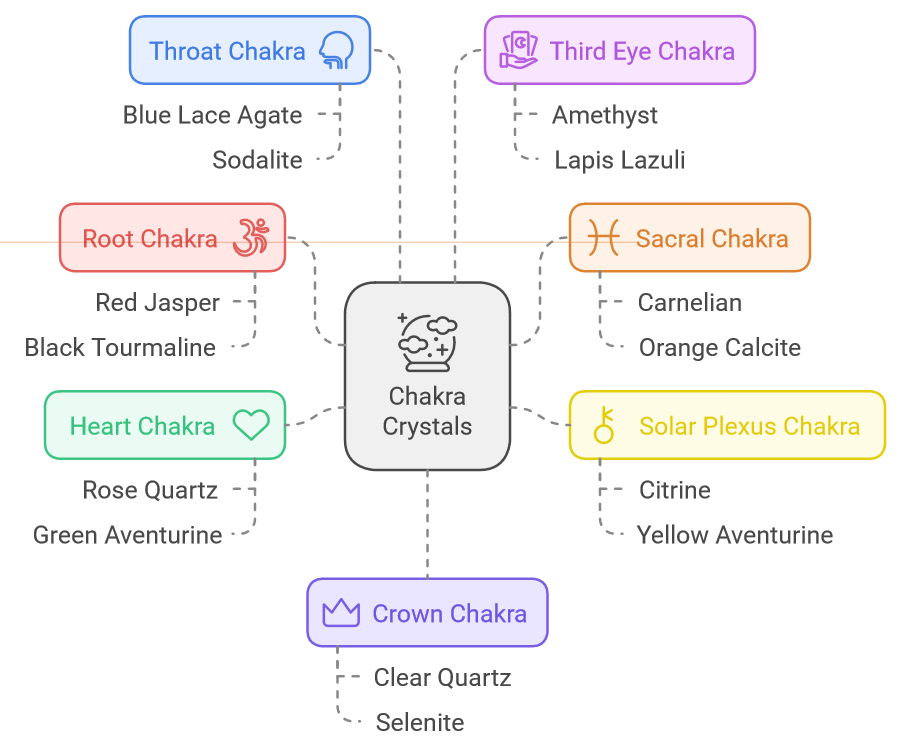
Crystal chakra alignment combines the practice of crystal healing with the concept of chakras from Hindu and Buddhist traditions.
[Diagram Description: Imagine a vertical diagram of a human silhouette with seven coloured points along the central axis, representing the chakras. Next to each chakra point, display an image of the corresponding crystal typically used for that chakra.]
The seven main chakras and their associated crystals are:
- Root Chakra (Red): Red Jasper or Black Tourmaline
- Sacral Chakra (Orange): Carnelian or Orange Calcite
- Solar Plexus Chakra (Yellow): Citrine or Yellow Aventurine
- Heart Chakra (Green/Pink): Rose Quartz or Green Aventurine
- Throat Chakra (Blue): Blue Lace Agate or Sodalite
- Third Eye Chakra (Indigo): Amethyst or Lapis Lazuli
- Crown Chakra (Violet/White): Clear Quartz or Selenite
Practitioners believe that placing these crystals on or near the corresponding chakra points can help balance and align the body’s energy centres.
Choosing and Caring for Crystals
When selecting crystals:
- Trust your intuition: Many practitioners believe you’ll be drawn to the crystals you need.
- Research: Learn about different crystals and their purported properties.
- Authenticity: Purchase from reputable sources to ensure genuine crystals.
Caring for your crystals:
- Cleansing: Believed to remove accumulated negative energy. Methods include:
- Moonlight or sunlight exposure
- Smudging with sage
- Burying in soil
- Saltwater bath (for non-water soluble crystals)
- Charging: Exposing crystals to moonlight or sunlight to “recharge” their energy.
- Intention setting: Meditating with the crystal to program it for a specific purpose.
Conclusion
Crystal healing, while not scientifically proven, remains a popular practice in alternative and complementary medicine. Its enduring appeal lies in its ancient roots, the aesthetic beauty of crystals, and the holistic approach it offers to health and well-being.
While many find comfort and perceived benefits in crystal healing, it’s crucial to approach it as a complementary practice rather than a replacement for conventional medical care. The power of belief, relaxation, and mindfulness associated with crystal healing may contribute to its reported benefits.
As with any alternative therapy, individuals interested in crystal healing should research thoroughly, consult with healthcare professionals, and make informed decisions about their health practices. Whether one believes in the metaphysical properties of crystals or simply appreciates them for their beauty, these fascinating minerals continue to captivate human interest and spark discussions about holistic approaches to health and wellness.