Sound therapy, also known as sound healing or vibrational medicine, is an alternative and complementary healing practice that uses auditory stimuli to promote physical, emotional, and mental well-being. This ancient practice has roots in various cultures worldwide and has gained renewed interest in recent years as people seek holistic approaches to health and wellness.
Historical Background
The use of sound for healing purposes dates back thousands of years:
- Ancient Greece: Pythagoras, the Greek philosopher and mathematician, used specific intervals and ratios in music for healing.
- Indigenous cultures: Many Native American, Aboriginal, and other indigenous traditions incorporate chanting, drumming, and singing in healing rituals.
- Tibetan traditions: Tibetan singing bowls have been used for centuries in meditation and healing practices.
- Gregorian chants: These monotonous vocal pieces were believed to have spiritual and healing properties.
- Modern era: In the 20th century, researchers began studying the effects of sound on the human body, leading to the development of various sound therapy techniques.
The Science Behind Sound Therapy
Sound therapy is based on the principle that everything in the universe, including our bodies, is in a state of vibration. Key scientific concepts include:
- Resonance: The ability of one vibrating body to cause vibrations in another.
- Entrainment: The synchronisation of organisms to an external rhythm.
- Brainwave states: Different frequencies of sound can influence brainwave patterns, potentially inducing relaxation or heightened awareness.
- Stress reduction: Certain sounds and music can lower cortisol levels and reduce stress.
- Pain management: Some studies suggest that sound therapy can help in managing chronic pain.
While more research is needed, some scientific studies have shown promising results in areas such as stress reduction, pain management, and improved sleep quality.
Common Sound Therapy Techniques
- Guided Sound Meditation: Using specific sounds or music to guide meditation sessions.
- Binaural Beats: Two slightly different frequencies played in each ear, creating a perceived third tone that can influence brainwave states.
- Tuning Fork Therapy: Using calibrated tuning forks to apply specific vibrations to different parts of the body.
- Vocal Toning and Overtone Chanting: Using one’s own voice to create healing vibrations.
- Instrumental Sound Therapy: Using instruments like gongs, drums, or stringed instruments for therapeutic purposes.
- Nature Sounds: Incorporating recordings of natural sounds like rainfall, ocean waves, or forest ambience.
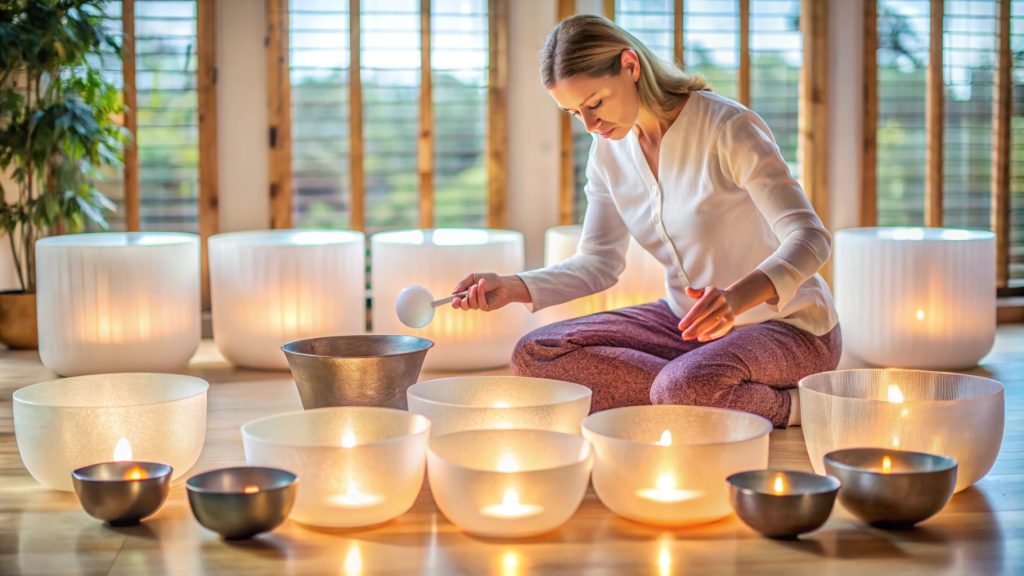
- Crystal Bowl Sound Baths: Immersive experiences using the resonant tones of crystal singing bowls.
Crystal Singing Bowls: Bridging Sound Therapy and Crystal Healing
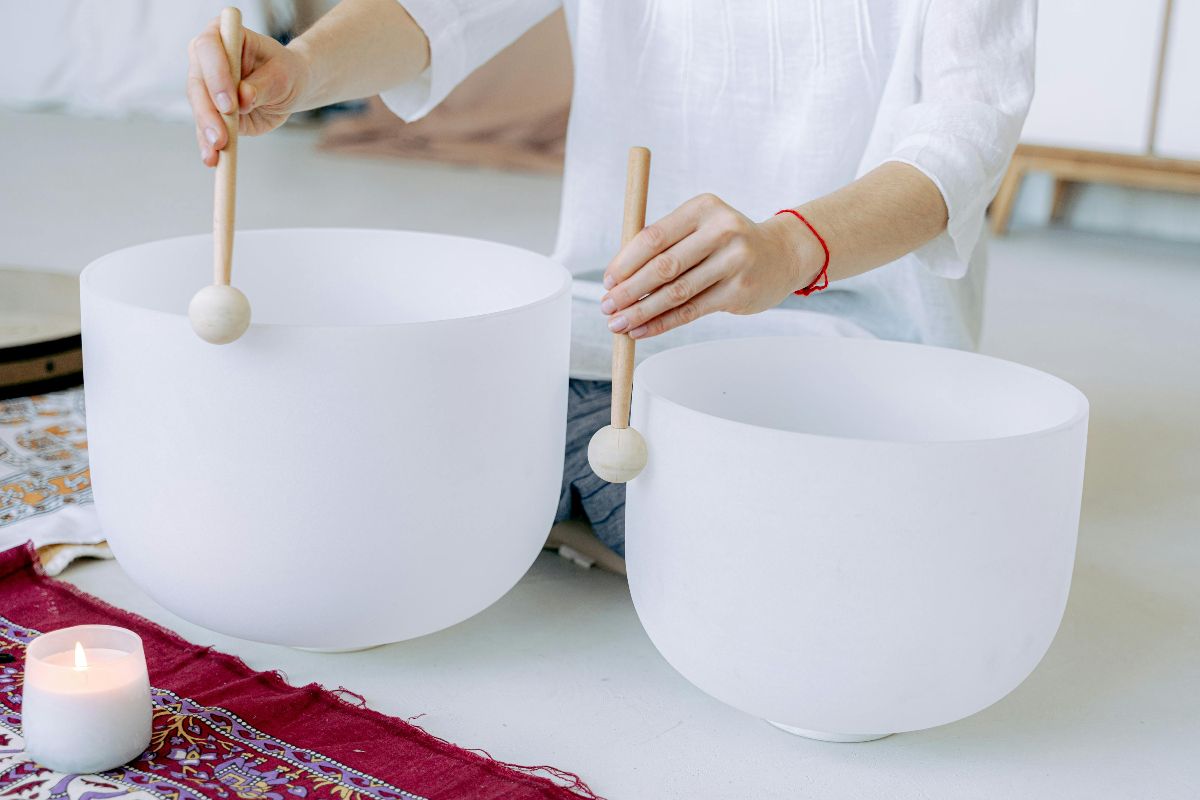
Crystal singing bowls represent a unique intersection between sound therapy and crystal healing. These bowls are typically made from 99.992% pure crushed quartz and heated to about 4000°F in a centrifugal mold.
Key points about crystal singing bowls:
- Tonal quality: They produce a pure, resonant tone that many find deeply relaxing.
- Vibrational properties: The crystalline structure is believed to enhance the vibrational effects of the sound.
- Chakra alignment: Different sized bowls produce different notes, often associated with specific chakras.
- Quartz properties: Practitioners believe the quartz amplifies and transmits the healing intentions of the therapist.
- Usage: They can be played by striking or by running a mallet around the rim, creating sustained tones.
The Sound Therapy Session
A typical sound therapy session might include:
- Initial consultation: Discussing the client’s health concerns and goals.
- Relaxation: Guiding the client into a relaxed state, often lying down comfortably.
- Sound immersion: Introducing various sounds, which might include crystal bowls, gongs, chimes, or recorded music.
- Focused healing: The practitioner may direct sounds to specific areas of the body.
- Integration: A period of silence to allow the effects to integrate.
- Closure: Gentle return to full awareness and discussion of the experience.
Potential Benefits and Applications
Proponents of sound therapy claim various benefits, including:
- Stress and anxiety reduction
- Improved sleep quality
- Pain management
- Enhanced creativity and mental clarity
- Emotional healing and trauma release
- Spiritual growth and self-awareness
- Improved immune function
- Balancing of the autonomic nervous system
Considerations and Cautions
While generally considered safe, there are some considerations:
- Volume: Excessive volume can damage hearing.
- Epilepsy: Certain sounds might trigger seizures in people with photosensitive epilepsy.
- Mental health: Some people with certain mental health conditions might find the experience overwhelming.
- Pregnancy: High-intensity low-frequency sounds should be avoided during pregnancy.
- Complementary nature: Sound therapy should complement, not replace, conventional medical treatments.
Integration with Other Therapies
Sound therapy often complements other healing modalities:
- Massage therapy: Sound can enhance relaxation during massage.
- Acupuncture: Some practitioners use tuning forks on acupuncture points.
- Yoga: Sound baths are often incorporated into yoga sessions.
- Psychotherapy: Sound can be used to facilitate emotional release in therapy sessions.
- Meditation: Sounds can guide and deepen meditative states.
The Future of Sound Therapy
As interest in holistic health practices grows, sound therapy continues to evolve:
- Technology integration: Development of personalised sound healing apps and devices.
- Scientific research: Increased studies on the efficacy of sound therapy for various conditions.
- Medical integration: Potential incorporation into conventional medical settings for pain management and stress reduction.
- Virtual reality: Combination of sound therapy with VR for immersive healing experiences.
Conclusion
Sound therapy offers a non-invasive, gentle approach to promoting well-being. While more research is needed to fully understand its effects, many people find it a valuable tool for relaxation, stress reduction, and personal growth. As with any complementary therapy, it’s important to approach sound therapy with an open mind, but also with a critical eye, and to consult with healthcare professionals when using it alongside conventional treatments.
Whether experienced through the pure tones of crystal singing bowls, the complex harmonies of instrumental music, or the primal rhythms of drumming, sound therapy invites us to explore the healing potential of vibration and resonance. As we continue to unravel the complex relationships between sound, body, and mind, sound therapy stands as a testament to the power of one of our most fundamental senses in promoting holistic health and wellness.