Ayurveda, often referred to as the "Mother of All Healing," is one of the world's oldest holistic healing systems. Originating in India over 5,000 years ago, Ayurveda continues to be a prevalent form of medicine and lifestyle practice in the Indian subcontinent and has gained significant popularity worldwide in recent decades.
The term "Ayurveda" is derived from two Sanskrit words: "Ayur" meaning life, and "Veda" meaning science or knowledge. Thus, Ayurveda translates to "The Science of Life." This ancient system of medicine is based on the premise that health and wellness depend on a delicate balance between the mind, body, and spirit.
Historical Background
- Origins: Ayurveda's roots can be traced back to the Vedic period in India (1500-500 BCE).
- Classical period: The foundational texts of Ayurveda, Charaka Samhita and Sushruta Samhita, were composed between 200 BCE and 200 CE.
- Golden age: Ayurveda flourished in India between 800 and 1000 CE.
- Decline: The practice faced challenges during the medieval period due to foreign invasions and colonialism.
- Revival: In the 20th century, there has been a resurgence of interest in Ayurveda both in India and globally.
Fundamental Principles of Ayurveda
The Five Elements (Pancha Mahabhuta)
Ayurveda posits that all things in the universe, including the human body, are composed of five elements:
- Ether (Akasha)
- Air (Vayu)
- Fire (Agni)
- Water (Jala)
- Earth (Prithvi)
The Three Doshas
These elements combine in the human body to form three life forces or energies, known as Doshas:
- Vata (Ether and Air): Governs movement and is associated with creativity and flexibility.
- Pitta (Fire and Water): Governs metabolism and transformation, associated with intelligence and understanding.
- Kapha (Water and Earth): Governs structure and stability, associated with calm and love.
Every individual has a unique proportion of these three doshas, which defines their Ayurvedic constitution or Prakriti.
Balance and Health
In Ayurveda, health is defined as a state where:
- The three doshas are in balance
- Digestion and metabolism (Agni) function optimally
- Tissues (Dhatus) and waste products (Malas) are in harmony
- The mind, soul, and senses experience bliss
Illness is believed to be caused by an imbalance in the doshas.
Ayurvedic Practices and Treatments
Diagnosis in Ayurveda
Ayurvedic practitioners use various methods to diagnose imbalances:
- Pulse diagnosis (Nadi Pariksha)
- Tongue examination
- Visual examination of physical features
- Personal and medical history
Treatment Approaches
- Diet and Nutrition: Tailored to an individual's dosha composition.
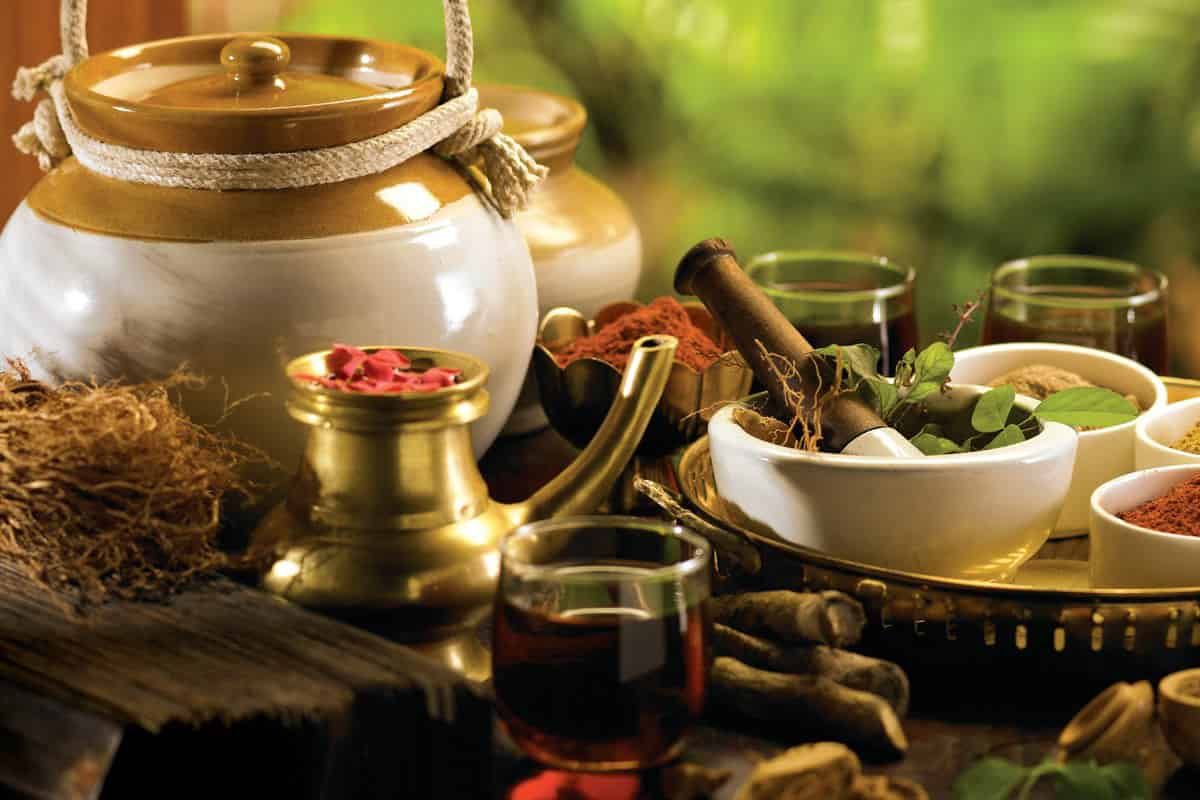
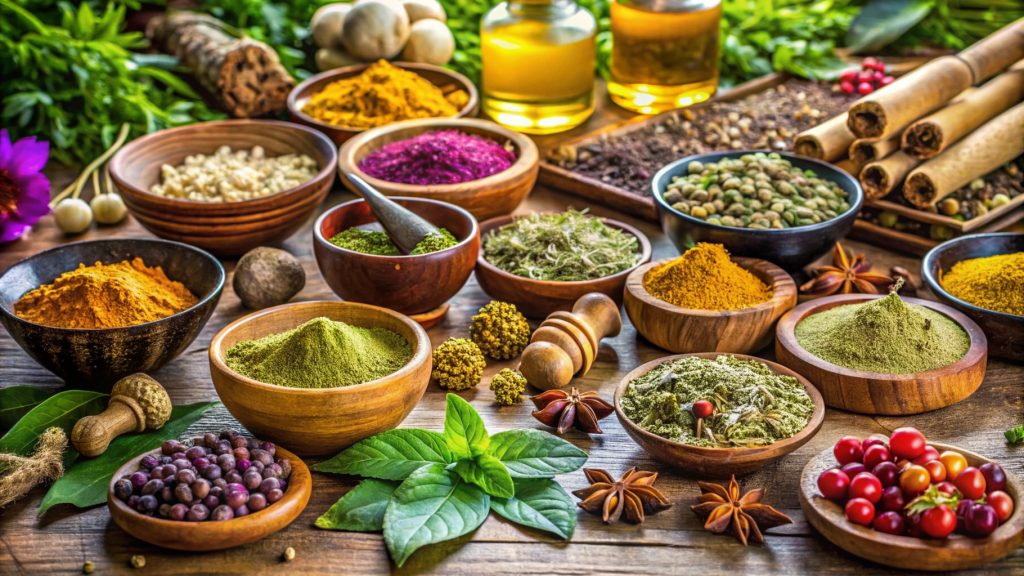
- Herbal Remedies: Using a vast pharmacopoeia of medicinal plants.
- Lifestyle Modifications: Including daily routines (Dinacharya) and seasonal routines (Ritucharya).
- Panchakarma: A five-fold purification therapy to cleanse the body of toxins.
- Yoga and Meditation: For physical and mental balance.
- Massage Therapy: Using herbal oils (Abhyanga).
- Breathing Exercises (Pranayama): To balance the flow of vital energy.
Panchakarma: The Five Actions
Panchakarma is a cornerstone of Ayurvedic detoxification and rejuvenation:
- Vamana: Therapeutic emesis
- Virechana: Purgation therapy
- Basti: Enema therapy
- Nasya: Nasal administration of medications
- Raktamokshana: Bloodletting (now rarely practiced)
Ayurvedic Herbology
Ayurveda utilizes a vast array of herbs and plant-based remedies. Some key herbs include:
- Ashwagandha: For stress relief and vitality
- Turmeric: For its anti-inflammatory properties
- Triphala: A combination of three fruits for digestive health
- Brahmi: For cognitive function and memory
- Shatavari: For reproductive health and hormonal balance
Modern Applications and Research
While Ayurveda is recognized as a traditional system of medicine in many countries, its integration into modern healthcare systems varies:
- In India: Ayurveda is recognized and regulated by the government, with dedicated hospitals and research institutes.
- Global recognition: The World Health Organization (WHO) has recognized Ayurveda's potential contributions to global health.
- Research: There is growing scientific interest in Ayurvedic principles and remedies, with studies on herbs like turmeric showing promising results.
- Integration: Some healthcare systems are exploring ways to integrate Ayurvedic practices with conventional medicine.
Challenges and Controversies
- Standardization: Lack of standardization in Ayurvedic medicines and practices.
- Heavy metal concerns: Some Ayurvedic preparations have been found to contain harmful levels of heavy metals.
- Scientific evidence: While some Ayurvedic practices have shown benefits, many lack rigorous scientific validation.
- Regulation: Varying regulatory standards across different countries.
Ayurveda in Modern Lifestyle
Ayurveda has influenced various aspects of modern wellness culture:
- Dietary trends: Popularity of Ayurvedic superfoods and eating according to one's dosha.
- Beauty and skincare: Ayurvedic ingredients in cosmetics and beauty rituals.
- Yoga and meditation: Often practiced alongside Ayurvedic principles.
- Stress management: Ayurvedic techniques for work-life balance and stress reduction.
The Future of Ayurveda
As interest in holistic and preventive healthcare grows, Ayurveda continues to evolve:
- Research: Increased scientific studies on Ayurvedic herbs and practices.
- Technology: Development of apps and wearables based on Ayurvedic principles.
- Personalized medicine: Ayurvedic concepts of individual constitution aligning with modern trends in personalized healthcare.
- Global reach: Growing popularity of Ayurvedic wellness retreats and tourism.
Conclusion
Ayurveda, with its holistic approach to health and well-being, offers a unique perspective on the intricate connections between mind, body, and spirit. While its ancient wisdom continues to guide millions in their quest for balance and health, the integration of Ayurveda with modern scientific understanding presents both challenges and opportunities.
As we navigate the complexities of modern life and healthcare, Ayurveda's emphasis on individualized care, prevention, and natural remedies provides valuable insights. Whether used as a complementary approach alongside conventional medicine or as a guide for daily wellness practices, Ayurveda invites us to consider health not just as the absence of disease, but as a state of vibrant balance and harmony in all aspects of life.
The journey of Ayurveda from ancient Indian wisdom to a globally recognized system of health and wellness is a testament to its enduring relevance. As research continues and our understanding deepens, Ayurveda stands poised to play a significant role in shaping holistic approaches to health in the 21st century and beyond.